


29.08.2026
15 Weird German Expressions Explained
German has a lot of expressions that make perfect sense to native speakers — until you translate them literally.
Then things get... strange.
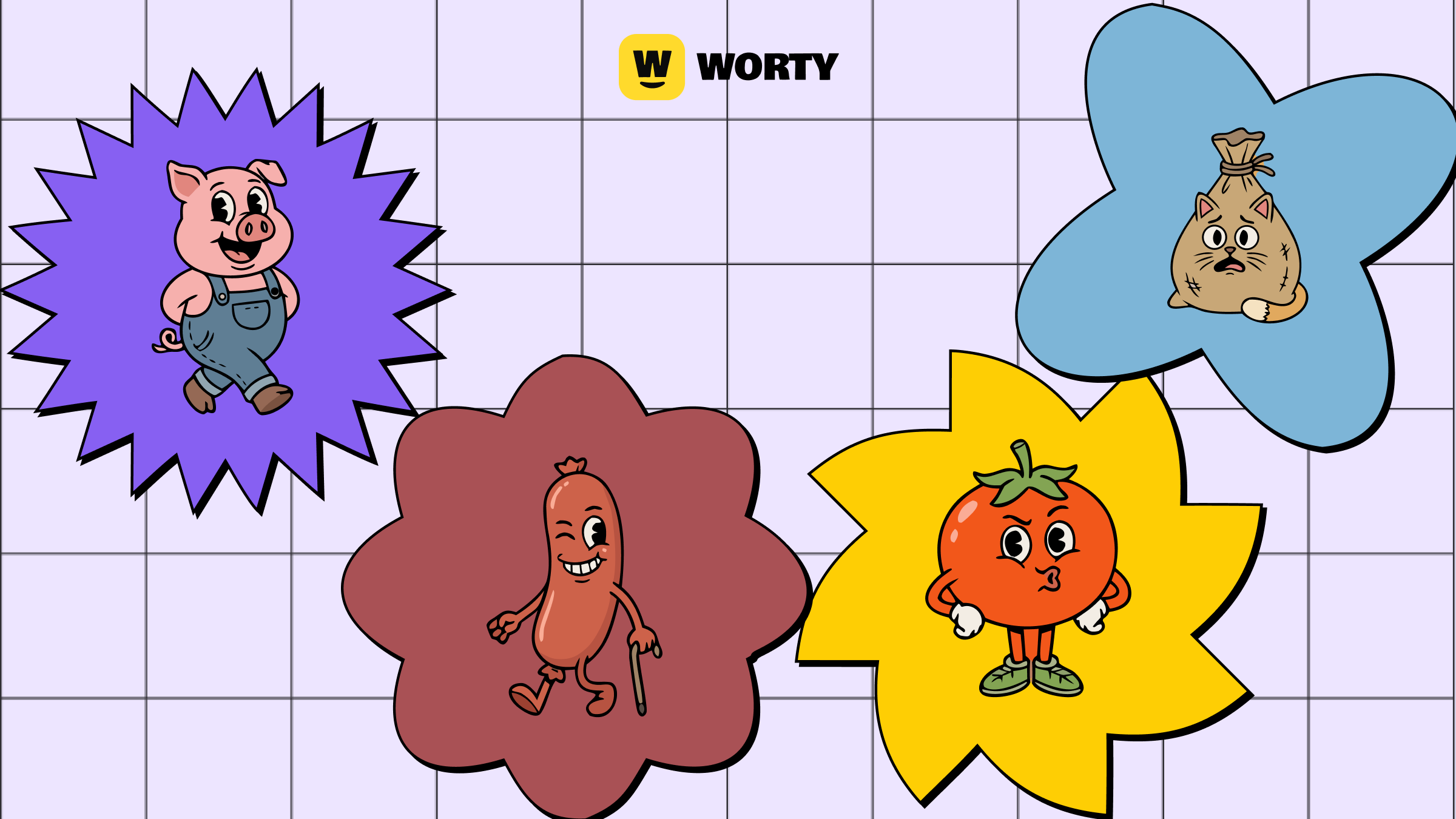
Why would someone have tomatoes on their eyes?
Why would you understand only train station?
And why would anyone buy a cat in a bag?
These expressions are called German idioms (Redewendungen), and you'll hear many of them in everyday conversations.
Here are 15 German expressions that sound absolutely ridiculous when translated literally — but make perfect sense once you know what Germans actually mean.
1. Ich verstehe nur Bahnhof 🚂
Literally:
"I only understand train station."
Actually means:
"I don't understand anything."
If someone explains something and you have absolutely no idea what's going on, you can say:
Ich verstehe nur Bahnhof.
It's basically the German version of:
"It's all Greek to me."
Example:
A: Also, du musst zuerst die Datei komprimieren und dann den Server konfigurieren... B: Sorry, ich verstehe nur Bahnhof.
2. Die Daumen drücken 👍
Literally:
"Press the thumbs."
Actually means:
"Keep your fingers crossed."
Instead of crossing your fingers, Germans traditionally press their thumbs to wish someone good luck.
Ich drücke dir die Daumen!
= Good luck! / I'm keeping my fingers crossed for you!
Example:
Ich habe morgen meine Prüfung. Ich drücke dir die Daumen!
3. Tomaten auf den Augen haben 🍅
Literally:
"To have tomatoes on your eyes."
Actually means:
"To not see something obvious."
If someone can't see something that's right in front of them, Germans might say:
Du hast wohl Tomaten auf den Augen!
It's usually playful or slightly teasing.
Example:
Wo ist mein Handy? Ich finde es nicht! Es liegt direkt vor dir. Hast du Tomaten auf den Augen?
4. Die Katze im Sack kaufen 🐱
Literally:
"To buy a cat in a bag."
Actually means:
"To buy something without seeing or checking it first."
If you buy something without knowing what you're actually getting, you're basically:
eine Katze im Sack kaufen
It's very similar to the English expression:
"to buy a pig in a poke."
Example:
Ich würde das Auto niemals kaufen, ohne es vorher zu testen. Ich will ja nicht die Katze im Sack kaufen.
5. Da liegt der Hund begraben 🐕
Literally:
"That's where the dog is buried."
Actually means:
"That's the heart of the problem."
This expression is used when you've finally discovered the real reason behind a situation.
Da liegt der Hund begraben.
= That's the problem. / That's where the real issue lies.
Example:
Warum funktioniert das Projekt nicht? Wir haben einfach kein Geld. Da liegt der Hund begraben.
6. Schwein haben 🐷
Literally:
"To have a pig."
Actually means:
"To be lucky."
If something goes surprisingly well, you can say:
Ich habe Schwein gehabt!
= I was lucky!
Example:
Du bist gerade noch dem Unfall entkommen! Ja, ich habe echt Schwein gehabt.
7. Ich drücke die Daumen 🤞
Literally:
"I'm pressing the thumbs."
Actually means:
"I'm wishing you good luck."
Yes, this expression is so common that it deserves remembering.
Ich drücke dir die Daumen!
You can use it before:
an exam; an interview; an important meeting; a competition; basically anything stressful.
8. Einen Korb geben 🧺
Literally:
"To give someone a basket."
Actually means:
"To reject someone."
If someone asks you out and you reject them, you can say:
Sie hat ihm einen Korb gegeben.
= She rejected him.
It's mostly used in romantic or flirting situations.
Example:
Hat er sie nach einem Date gefragt? Ja, aber sie hat ihm einen Korb gegeben.
9. Ins Gras beißen 🌱
Literally:
"To bite the grass."
Actually means:
"To die."
This is a rather informal and sometimes humorous way of saying that someone has died.
Er hat ins Gras gebissen.
Depending on the context, it can sound quite dark or joking.
10. Zwei Fliegen mit einer Klappe schlagen 🪰
Literally:
"To kill two flies with one swat."
Actually means:
"To kill two birds with one stone."
The idea is exactly the same as in English: accomplish two things with one action.
Damit schlage ich zwei Fliegen mit einer Klappe.
Example:
Ich gehe zu Fuß zur Arbeit und mache gleichzeitig Sport. So schlage ich zwei Fliegen mit einer Klappe.
11. Jetzt geht's um die Wurst 🌭
Literally:
"Now it's about the sausage."
Actually means:
"Now it really matters."
This expression is used when things are getting serious and an important moment has arrived.
Jetzt geht's um die Wurst!
Think:
"This is it."
Example:
Das Finale beginnt in fünf Minuten. Jetzt geht's um die Wurst!
12. Das ist nicht mein Bier 🍺
Literally:
"That's not my beer."
Actually means:
"That's not my problem / That's none of my business."
If something doesn't concern you, you can say:
Das ist nicht mein Bier.
It's informal and conversational.
Example:
Was die beiden miteinander machen, ist nicht mein Bier.
13. Die Kirche im Dorf lassen ⛪
Literally:
"Leave the church in the village."
Actually means:
"Don't exaggerate." / "Keep things in perspective."
If someone is making a situation sound much more dramatic than it really is:
Lass mal die Kirche im Dorf.
It's basically a way of saying:
"Calm down. It's not that serious."
14. Jemandem auf der Nase herumtanzen 👃
Literally:
"To dance around on someone's nose."
Actually means:
"To walk all over someone / take advantage of someone."
If someone constantly gets their way because another person doesn't stand up for themselves:
Du lässt dir zu viel auf der Nase herumtanzen.
= You're letting people walk all over you.
15. Die Nase voll haben 👃
Literally:
"To have a full nose."
Actually means:
"To be fed up."
This one is extremely useful in everyday German.
Ich habe die Nase voll.
= I'm fed up. / I've had enough.
Example:
Ich habe die Nase voll von diesem Wetter.
= I'm so fed up with this weather.
Why Does German Have So Many Weird Expressions?
Idioms exist in almost every language.
English has:
"It's raining cats and dogs."
"Break a leg."
"Spill the beans."
German has its own collection of strange expressions — and many of them are impossible to understand if you translate them word for word.
That's why learning German isn't just about memorizing individual words.
You also need to learn how native speakers actually use the language.
Sometimes the literal translation makes no sense at all.
And that's exactly what makes idioms so memorable.
The Best Way to Learn German Idioms
Don't try to memorize all 15 expressions at once.
Pick a few that you could realistically use.
For example:
Ich verstehe nur Bahnhof.
Ich habe die Nase voll.
Ich habe Schwein gehabt.
Then create your own situations for them.
The more often you encounter an expression in context, the easier it becomes to recognize and eventually use it naturally.
And when you come across a new expression you don't know, save it somewhere so you can come back to it later.
Build Your German Vocabulary With Worty
German becomes much easier when you stop trying to memorize random lists and start collecting words and expressions that you actually encounter.
With Worty, you can save new German vocabulary and build your own personal collection of words and expressions worth remembering.
Because sometimes the easiest way to remember a German phrase is to ask yourself:
"Why on earth are Germans talking about sausages?"
And suddenly, you never forget it.
More Articles
5 Important German Connectors You Need to Know
15 German Modal Particles You Need to Know
Learn 15 common German modal particles like doch, mal, ja, schon and denn — what they mean and how to sound more natural.
New German Vocabulary Card Decks for Everyday Life
8 German Antonyms You Should Know